I did IB.
If you did IB, that statement speaks for itself. If you didn't, you probably have no idea what I mean.
IB stands for International Baccalaureate. It's a worldwide program that effectively means that every student enrolled takes the same standardized tests at the end of high school, or the equivalent, but it's more than that. First of all, the official IB program is two years, like A-level years in the UK. At my high school, though, we entered Pre-IB in freshman year, taking classes that would prepare us for the "official" program, getting us used to writing the essays, to doing the community service hours, to balancing the homework. Pre-IB gave us the foundations in language and science we would need to go into IB-level courses, offered us the opportunity to take the Advanced Placement courses we'd get credit for at colleges that didn't understand IB. Really, though, these first two years weeded out the smart kids who maybe didn't thrive on that kind of intensity, and ensured that those of us who would continue into "real" IB were enrolled at the same school, because most of us weren't districted for it. It wasn't a state secret that they'd started the program at our school to bring up its test scores.
Maybe it sounds like I'm explaining a sort of intense AP program, those test-driven courses that give students at schools all over the country yearly breakdowns, but IB is more than that. As a snobbish teenager, I believed IB existed as an attempt to provide American students with an educational equivalent to hardcore European academic courses like the French baccalaureat. But then, why would the IB headquarters be in Cardiff? Why would there be IB programs in countries that have the bac, A-levels, and other rigorous exams? Why would the program require service hours, a thesis-like essay, and the signature course Theory of Knowledge? Why the regimented courses--five required subjects, one elective--rather than allowing tests to be sat à la carte like AP or SAT IIs? Because IB was created to be something more.
Doing IB, which is how current and former IB students refer to our time in the trenches, connects students across the world. My current roommate did it as well, in a school in New Jersey that only offered the program for five years, and although our experiences were totally different, our shared experience connects us in other ways. It's more than that she understands the phrases of my high school experience--EE, sixth subject, Internal Assessment. Students all over the US can bond over the structure of AP exam DBQs. IB affects the way we interact with the world. The program focuses on interconnectivity. Often we read books in English that illuminated something we'd covered in History of the Americas. Analyzing a play for IB Theater led you to reconsider something you'd said in a Theory of Knowledge discussion. This was why we couldn't take IB Biology and not English, why dropping out of the program often meant switching schools--to somewhere that you could get away with As in Chemistry and Ds in History--and why choosing to take Math Studies barred you from taking Chemistry.
Not that we didn't have choices. We chose our language, our science, our sixth subject--aka the elective in which you be examined on an IB level--and our math. But no matter what track we were on, class discussion usually meant we had some understanding of the road we didn't travel. We did cross-discipline projects in science. Our Calculus teacher sometimes spent time explaining a concept we hadn't grasped in TOK. Our French readings were about current events, we read novels to understand the zeitgeist of historical periods, and our writing abilities were tested in epic math projects that required a knowledge of Fibonacci's history. Everything connected.
This connective thinking was celebrated at my liberal arts university, enough so that it helped land me my scholarship. The Core program there mimicked IB's emphasis on applying one subject to understand another. So, basically, I've spent the majority of my time as an engaged, thinking person examining things in a larger context, using multiple disciplines, and knowing that nothing exists in a vacuum. It effects everything I do. I've been particularly aware of this in my reading lately--a lot of Middle Eastern lit--and it made me think about the content of my high school experience, not just the context, which is why I wanted to give this detailed background before I go into my thoughts about current events, the complexity of cause and effect, and how I see all of that affecting my own thought processes.
Wednesday, January 29, 2014
Tuesday, January 28, 2014
Scholarship and Self Update
A comment on my recent post about The True Adventures of Nicolo Zen has made me think I need to add a caveat to this blog:
I'm a scholar by training. I read a book thinking about tropes, and agency, and that book's place in conversation with literature in general. To the average reader, a book may be a "rollicking adventure," but even if I agree with that--which I do in the case of Nicolo Zen--I can see the parts of the book that are problematic. I like parsing these out and determining what they mean to me in the context of the book, and in a broader context. That doesn't mean anyone who reads the book must do so, that they can't enjoy it, or that I don't enjoy it. I purposefully didn't frame that post as a review, because it's not. It's an amalgamation of my thoughts, which are by nature scholarly. Blame my MA.
Anyway, today's post is the more personal update I promised would come. There's a lot going on in my life currently. On the writing side, things are good. I participated in PitchWars as an alternate. My mentor Jaye Robin Brown and her mentee Nina Mareno got third place, because they are FABULOUS.
Lifewise, things are less excellent. I'm mostly recovered from the spinal fusion surgery I had in October, but still have some pain and stiffness. My life is in limbo, because I'm planning another minor surgery in March, and don't want to find a significant job position and then have surgery within my 90-day probationary period, because that did not end well last time. I am going to take on freelance work in the meantime, and am unashamedly pointing people toward my GoFundMe page if they have the resources to help me stay independent in the meantime. The other reason I am so willing to ask for help and not to find a fulltime position yet is that I haven't returned to Boston from Christmas yet. My terminally-ill father is in hospice, so I've stuck around to help my mother with my little brother for the duration. I'll probably be back up north in a couple of weeks, one way or another.
So that's now in a nutshell. More pretentious thoughts to come this week, I'm sure.
I'm a scholar by training. I read a book thinking about tropes, and agency, and that book's place in conversation with literature in general. To the average reader, a book may be a "rollicking adventure," but even if I agree with that--which I do in the case of Nicolo Zen--I can see the parts of the book that are problematic. I like parsing these out and determining what they mean to me in the context of the book, and in a broader context. That doesn't mean anyone who reads the book must do so, that they can't enjoy it, or that I don't enjoy it. I purposefully didn't frame that post as a review, because it's not. It's an amalgamation of my thoughts, which are by nature scholarly. Blame my MA.
Anyway, today's post is the more personal update I promised would come. There's a lot going on in my life currently. On the writing side, things are good. I participated in PitchWars as an alternate. My mentor Jaye Robin Brown and her mentee Nina Mareno got third place, because they are FABULOUS.
Lifewise, things are less excellent. I'm mostly recovered from the spinal fusion surgery I had in October, but still have some pain and stiffness. My life is in limbo, because I'm planning another minor surgery in March, and don't want to find a significant job position and then have surgery within my 90-day probationary period, because that did not end well last time. I am going to take on freelance work in the meantime, and am unashamedly pointing people toward my GoFundMe page if they have the resources to help me stay independent in the meantime. The other reason I am so willing to ask for help and not to find a fulltime position yet is that I haven't returned to Boston from Christmas yet. My terminally-ill father is in hospice, so I've stuck around to help my mother with my little brother for the duration. I'll probably be back up north in a couple of weeks, one way or another.
So that's now in a nutshell. More pretentious thoughts to come this week, I'm sure.
Saturday, January 25, 2014
The Stereotypical Representations in Nicolo Zen
I have been a horrible blogger for a long time. I can’t
promise I will get much better, but I want to do better at putting my thoughts
out into the world, mostly to save my long-suffering mother and roommate from
having to listen to me ramble constantly. I have personal things to get you, my
friends and readers, caught up on, but for today my thoughts are centered on
the book I just finished 
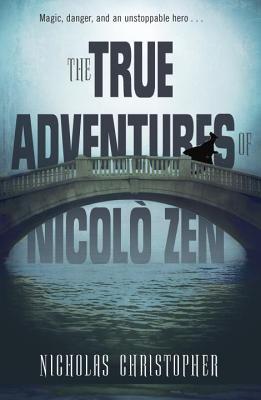
WARNING: SPOILERS AHEAD
This is a middle-grade novel set in eighteenth-century Venice. Nicolo Zen is a newly orphaned musician who disguises himself as a girl to get into an elite orphanage orchestra, overseen by Master Vivaldi. Christopher dealt surprisingly well with the lose of privilege Zen takes on in becoming a girl, and the story of Nicolo’s disguise, the intrigue in the orphanage, and the characters—vile and angelic alike—made the book initially promising. There were problematic elements already, though. Both of the villains within the orphanage walls were disabled. Aldo is a blind boy who has the clichéd enhance senses and milky eyes given to every blind villain. Additionally, his lack of vision means he is allowed to be in the girls’ presence without worry of impropriety—arguably denying his sexuality—and then he takes advantage of this privilege. The traditionally repugnant housemother, Marta, is a former member of the orchestra, deafened and embittered thanks to a “fall” down a flight of stairs. Her deafness supposedly prevents her from correctly reading situations, causing her to punish girls for nothing because there’s absolutely no way for her to know what’s going on without hearing their voices. Oh, but she may be faking the extent of her disability, because of course.
Even with these tropes, which Christopher obsessively
attempts to balance out with a kindly cook who lost a leg in the Navy, I think
I would have enjoyed this story if it had been a historical fiction novel about
a boy giving up his male privilege to become a great clarinetist. Instead, his
attempt to foil Aldo’s system of kidnapping helpless girls leads to his being
outed as a boy (perhaps more realistically than most disguise novels) and
thrown out of the orphanage. No matter, though, he has his friend the cook to
help him away, and he has a deus ex magician.
You see, Nicolo’s clarinet is magical. It doesn’t play
itself, exactly. It teaches him to play. Either way, it takes his agency long
before he disguises himself as a girl. And its maker, Massimo the Magnificent,
is the king of agency-taking. His assistants seem beholden to him, he threatens
Nicolo against losing the clarinet even though he implies it will only work for
its first owner, he demands without giving—and this is never acknowledged. Moreover, he is almost rewarded. After he gets
angry over Nicolo’s friend Adriana’s decision not to become his new assistant,
he demands they bring him a replacement. Juliette, the girl who Nicolo and
Adriana effectively give to him, eventually marries him. The text may want you
to think this is a love match, but the undercurrents of Massimo’s need for
control makes it sit wrong.
Worst of all, Massimo solves most of Nicolo’s problems for
him. Nicolo isn’t a weak character. He attempts to reclaim his agency by asking
Massimo to take the spell of his clarinet, and he rescues his friends from
Aldo’s clutches on more than one occasion—again, as girls they can’t save
themselves—but in the end (LOOK A SPOILER) it is Massimo who directly and
indirectly solves the Aldo problem. And when Nicolo looks at Aldo for the last time
he remarks: “The crows had yet to pluck out Aldo's blank, milky eyes, but I
would be lying if I said I felt a shred of pity for him at that moment.” (232)
This connects Aldo’s eyes—his blindness, his disability—with pity, implying
that looking at those eyes should incite pity. Indeed, implying that the fact
that the crows have yet to pluck them out is a negative in some way, that even
the birds aren’t attracted to this ugliness, or that even in death he is
unequal to his able-bodied thug friends.
I honestly believe this might have been a better book
without the magical realism. It is probably meant to evoke the operas of the
time, something about which I know very little, and there are themes of
doppelgangers, agency, and ability that might not come out in a more realistic
novel, but the period and subjects could be really interesting if explored
in-depth. Most disappointingly*, to me, the world of the Venice orphanage is set
up so well, with so much detail, but once Nicolo is yanked out of it, his
surroundings become much more superficial and the characters surrounding him
much less interesting, the magic overshadows the realism to an unnecessary
degree, and the stakes no longer seem dangerous.
I wish this had continued to be a book about a boy who disguised
himself as a girl in order to succeed. It would have perhaps taken more suspension
of disbelief without the magic, but I would have enjoyed it more.
*I accidentally typed "disapprovingly" in my first version of this post. Thanks to a helpful anon, I found the error and fixed it.
*I accidentally typed "disapprovingly" in my first version of this post. Thanks to a helpful anon, I found the error and fixed it.